14 Hand Drawn Flowers and Leaves: Botanical Design Elements
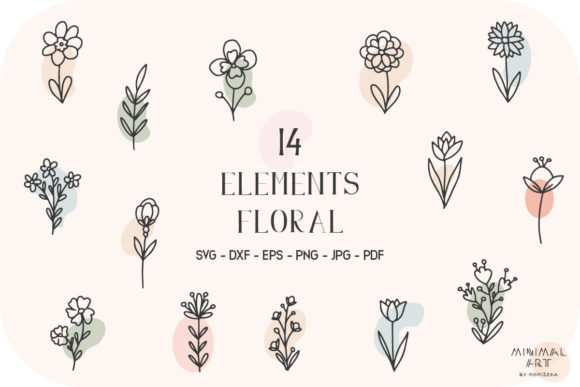
There’s a particular quality to a hand-drawn line that a vector program can’t quite replicate. It carries a subtle imperfection, a human touch that feels instantly relatable and warm. This is the essence of the 14 Hand Drawn Flowers and Leaves illustration set. It’s not just a collection of botanical graphics; it’s a toolkit for adding organic texture, artisanal charm, and a personal signature to your digital and print projects. For designers, small business owners, and creatives, these elements solve a common problem: how to make polished work feel genuinely handcrafted and inviting.
More Than Just Clip Art: The Anatomy of a Versatile Design Asset
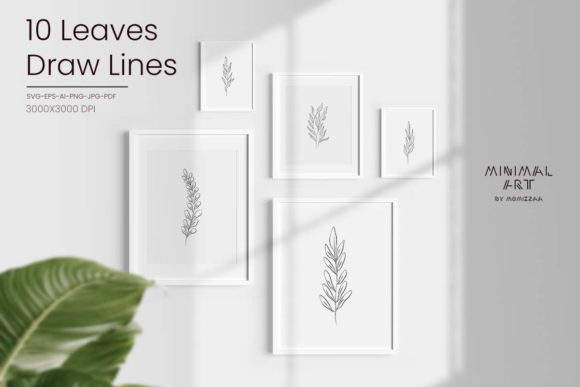
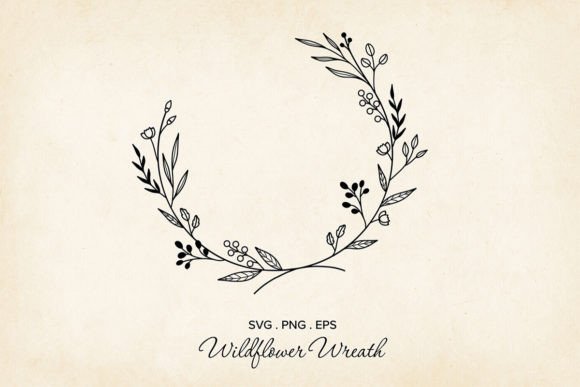
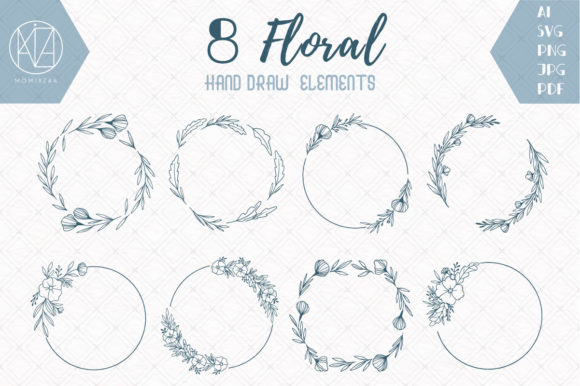
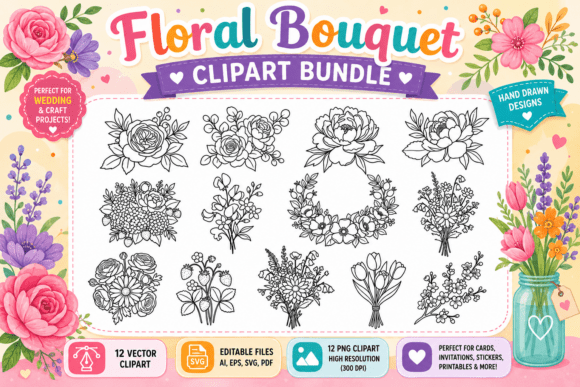
What makes this particular set of 14 Hand Drawn Flowers and Leaves stand out is its thoughtful composition and practical versatility. Each illustration is a standalone piece, yet they share a cohesive style—clean, detailed line work that balances simplicity with enough complexity to be visually interesting. They function beautifully as decorative accents, but their real power lies in their adaptability. Think of them as the visual equivalent of a neutral-toned fabric in a wardrobe: they can be dressed up or down, layered, colored, and scaled to fit countless contexts without losing their inherent character.
The delivery of the files speaks to a professional workflow. Receiving the illustrations in formats like SVG, EPS, and AI means they are fully scalable vectors. You can blow one up for a poster or shrink it for a favicon without any loss of quality. The PNG files with transparent backgrounds are ready for immediate drag-and-drop use in social media graphics or digital invitations, while the high-resolution JPGs are perfect for print projects. This multi-format approach ensures that whether you’re working in Adobe Illustrator, Canva, or a cutting machine software like Cricut Design Space, these elements are ready to go.
Integrating Organic Elements into Modern Branding
In a digital landscape often dominated by sharp edges and geometric precision, incorporating hand-drawn botanicals can be a strategic branding move. They introduce a sense of care, nature, and authenticity. Consider a small-batch skincare brand. Using a delicate floral illustration from this set on packaging labels, thank-you cards, and website headers creates a unified, story-rich visual identity that communicates “artisanal” and “natural” far more effectively than a stock photo ever could.
For a café or a wedding planner, these elements become integral to the brand identity. A single, elegant leaf motif can evolve into a logo accent, a pattern for menu backgrounds, a watermark for social media images, and a decorative border for client proposals. This consistency builds recognition. When a customer sees that familiar, graceful line work across different touchpoints—from an Instagram post to a physical brochure—it reinforces the brand’s personality and makes it more memorable. The key is to select one or two primary illustrations and use their style as a guide for all other design choices, from color palette to typography.
From Wedding Suites to Wall Art: Practical Project Applications
The utility of these botanical elements extends far beyond branding. Their applications are limited only by imagination:
- Invitations & Stationery: Design bespoke wedding suites, baby shower invites, or elegant dinner party menus. Use the flowers as corner accents, intertwined with text, or as a full wreath for a monogram.
- Print-on-Demand & Merchandise: Create standout designs for t-shirts, tote bags, mugs, and posters. A single, beautifully drawn fern or peony can become a minimalist bestseller on platforms like Etsy or Redbubble.
- Digital Products & Marketing: Enhance the perceived value of digital planners, e-book covers, online course materials, and blog graphics. A botanical header or divider breaks up text and makes content more scannable and enjoyable.
- Editorial & Packaging Design: Add sophistication to magazine layouts, lookbooks, or product packaging. Use them as spot illustrations, background textures, or decorative elements that complement, rather than compete with, the main content.
The set’s compatibility with cutting machines like Silhouette and Cricut opens another entire realm of creativity. Crafters can use the SVG and DXF files to cut intricate shapes from vinyl, cardstock, or heat-transfer material for custom decals, scrapbook embellishments, and personalized gifts.
Pairing Typography with Hand-Drawn Graphics
When you introduce hand-drawn elements, your choice of typography becomes crucial to maintaining visual harmony. The goal is balance, not competition. A highly ornate script font might clash with detailed floral illustrations, creating a cluttered look. Instead, consider these pairings:
- Clean Sans Serifs: Fonts like Montserrat, Poppins, or Open Sans provide a modern, stable counterpoint to the organic illustrations. This combination feels fresh, approachable, and highly readable.
- Elegant Serifs: A classic serif like Playfair Display or Cormorant pairs beautifully with the botanicals for a more formal, timeless, or editorial aesthetic, perfect for wedding invitations or luxury branding.
- Subtle Handwritten Fonts: For a cohesive artisan look, choose a simple, legible handwritten font. Avoid overly casual or complex scripts; the illustrations already provide the handcrafted feel, so the text should remain easy to read.
Always test your pairings. Place your chosen font alongside a few of the floral elements in a mockup. Does the hierarchy feel clear? Is the text still effortless to read at a glance? The botanicals should enhance the message, not obscure it.
Final Considerations for a Seamless Workflow
Before diving into a project, a couple of practical checks will save time. First, while the SVG files are single-layered, you can ungroup and manipulate individual parts within vector software if you need to isolate a specific petal or leaf. Second, always be mindful of the commercial licensing if you plan to sell products featuring these designs. The listing indicates they are for both personal and commercial use, which is standard for such assets, but it’s good practice to verify the specific terms for any large-scale application.
Ultimately, the value of the 14 Hand Drawn Flowers and Leaves set lies in its ability to bridge the gap between digital precision and human warmth. It provides a quick, professional way to inject personality and organic beauty into work that might otherwise feel sterile. In a world saturated with generic visuals, that hand-drawn touch can be the very detail that makes your project—and by extension, your brand—feel more thoughtful, authentic, and engaging.