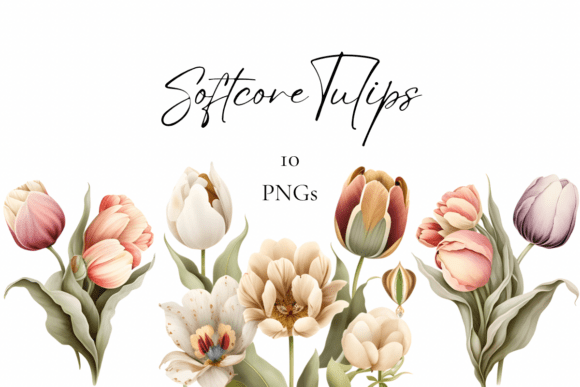
The Softcore Tulips: Vintage Charm for Modern Design
There's a quiet elegance in a faded flower, a story whispered by petals that have softened with time. This nostalgic, romantic feeling is precisely what the Delicate Vintage Tulip Clipart collection captures. Moving beyond the bold, saturated florals that dominate many design libraries, the Softcore Tulips offer a different kind of beauty—one that is muted, sophisticated, and deeply textured. For designers, crafters, and brand builders, this isn't just another set of flower graphics; it's a versatile tool for injecting a layer of hand-painted, artisanal charm into a wide array of projects.
A Palette of Whispered Hues
What immediately sets this collection apart is its thoughtfully curated color story. The ten illustrations exist in a harmonious blend of muted pinks, soft creams, dusty plums, and antique tones. This isn't the bright pink of a summer garden but the soft blush of a vintage photograph or the faded elegance of an heirloom fabric. Each tulip appears as if it were painted with a delicate, slightly weathered brush, creating a softly romantic aesthetic that feels both timeless and authentic. This premium font of floral art, with its transparent backgrounds and high-resolution (300 DPI) detail, integrates seamlessly into designs without the harsh edges or digital flatness that can cheapen a project's feel.
The practical value of such a design asset lies in its ability to convey a specific mood instantly. When you're building a brand identity for a boutique, a wedding planner, or a lifestyle blogger, the visual tone must align perfectly with the message. These vintage-inspired tulips communicate care, craftsmanship, and a gentle, welcoming sophistication. They are the visual equivalent of a handwritten font with elegant flourishes or a serif font with classic proportions—each element works together to build a cohesive and memorable brand identity.
From Digital Canvas to Physical Product
The true test of any creative font or graphic is its versatility across mediums. The Softcore Tulips excel here, bridging the gap between digital and print with ease. For digital creators, they are a perfect fit for social media graphics that need to stand out in a crowded feed. Imagine a series of Instagram posts for a spring collection or a Pinterest pin for a DIY tutorial, each anchored by a gentle, elegant tulip. They add a professional, curated touch that elevates content beyond the generic.
For packaging design, these illustrations are invaluable. A small business selling handmade soaps, candles, or artisanal teas can use a single tulip as a subtle brand mark on a label or as part of a pattern for packaging sleeves. The antique tones pair beautifully with kraft paper, linen textures, and other natural materials, reinforcing a story of quality and natural ingredients. In editorial design, such as for a magazine layout or a blogger's website, they can serve as delicate dividers, background elements, or featured spot illustrations that guide the reader's eye without overwhelming the readability of the accompanying typeface.
Practical Applications for the Modern Creative
Let's break down the concrete ways you can implement this floral clipart into your workflow:
- Branding & Logo Design: Use a single, iconic tulip as a secondary brand mark or as part of a logo lockup. It adds a touch of organic softness that can balance more geometric or modern sans serif fonts.
- Invitations & Stationery: For wedding invites, save-the-dates, or greeting cards, these tulips set a romantic, shabby chic tone. Layer them behind text or use them as corner accents for a professionally designed look.
- Digital Products & Marketing Assets: Enhance your digital scrapbooking kits, create beautiful lead magnets for email lists, or design elegant sale announcements. The transparent backgrounds make them easy to drag-and-drop into any layout.
- Home Decor Printables: Design printable wall art, calendar pages, or planner stickers. The muted palette ensures they complement a wide range of home decor styles without clashing.
- Merchandise: The high-resolution files are suitable for printing on physical products like tote bags, mugs, or apparel, especially for brands with a vintage or botanical theme.
Integrating Art with Typography
A key aspect of professional design is knowing how to pair visual elements. The Delicate Vintage Tulip Clipart has a distinct personality—it's gentle, historical, and textured. This informs your typography choices. To maintain visual consistency, pair these florals with fonts that share similar characteristics:
- Serif Fonts: A classic serif font with moderate contrast and elegant details will echo the timeless quality of the tulips. Think fonts with a slight old-world feel, perfect for body text in editorial layouts or on websites.
- Script & Handwritten Fonts: A flowing, script font can mirror the hand-painted nature of the illustrations. Use it for headlines or special phrases to enhance the romantic, artisanal vibe.
- Clean Sans Serif Fonts: For a more modern application, a clean sans serif font can provide a beautiful contrast, allowing the vintage florals to pop while ensuring excellent readability for longer text blocks.
The goal is not to match perfectly but to create a harmonious dialogue between the image and the word. Always test your font pairing with the actual clipart in your intended layout. Does the hierarchy feel right? Does the text remain legible when placed over or near the graphic? This practical testing is what separates a good design from a great one.
A Thoughtful Addition to Your Toolkit
Ultimately, the value of a resource like the Softcore Tulips collection is measured by its ability to solve real design problems and unlock creative potential. It provides a ready-made solution for adding a specific, sought-after aesthetic—vintage, elegant, soft—without requiring hours of custom illustration. For the small business owner, it's a cost-effective way to achieve a high-end look. For the crafter, it's a source of endless inspiration for junk journals and spring-themed craft projects. For the designer, it's a versatile asset that can be adapted across countless client projects.
Before using any such asset commercially, it's always wise to review the included license to ensure it covers your intended use, whether for personal projects or commercial products. This due diligence is part of professional practice. By choosing resources that are both beautiful and thoughtfully made, you build a library of design assets that not only make your work more efficient but also more distinctive, helping your projects—and your clients' brands—tell a more compelling and coherent visual story.