Botanical Beauty: Using Herbarium Watercolor Clipart in Your Designs
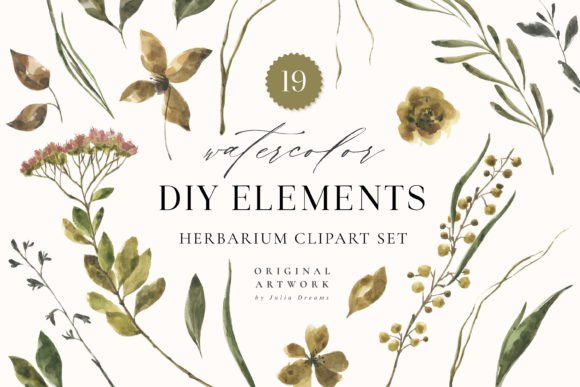
There’s a certain magic in pressing a flower between the pages of a heavy book, preserving a fleeting moment of natural beauty. That same sense of timeless elegance is what makes hand-painted watercolor elements so captivating in modern design. If you've been searching for a way to infuse your projects with organic charm and sophisticated detail, a carefully curated set of botanical illustrations might be the perfect solution. This particular collection, featuring 19 distinct hand-painted pieces, offers a versatile toolkit for creatives seeking that authentic, artisanal touch.
The Allure of Hand-Painted Details in a Digital Age
In a landscape saturated with sleek, digital-first graphics, watercolor elements stand out precisely because of their imperfections. The subtle variations in pigment, the delicate bleed of color, and the visible texture of the paper grain create a sense of warmth and humanity. These aren't sterile vector shapes; they are digital artifacts of a physical process. This authenticity resonates deeply with audiences, evoking feelings of nostalgia, craftsmanship, and care. For a designer, using assets like these is about more than just decoration—it's about storytelling and emotional connection.
The specific set from the Herbarium Collection is particularly useful because it balances variety with cohesion. You receive 19 individual elements, each a standalone piece of art rendered at high quality (300 DPI) and in substantial sizes, ranging from 890px to 2682px. This means they are not just for tiny accents; a single, larger piece can serve as the foundational visual for a poster or a book cover. The transparent .png format is the industry standard for seamless integration, allowing you to layer these botanicals over any background—whether it's a textured paper, a solid color, or a photograph—without clumsy white boxes or awkward cropping.
From Concept to Concrete: Real-World Applications
Understanding the technical specs is one thing, but seeing how they translate into tangible projects is where the value truly lies. Let's break down how you can deploy these watercolor elements effectively.
Elevating Brand Identity and Packaging
For small businesses, especially those in wellness, beauty, artisan food, or boutique retail, visual identity is everything. A set like this allows you to build a cohesive brand world. Imagine a skincare line using a consistent watercolor fern or eucalyptus sprig across its logo, product labels, and box packaging. This creates an immediate visual shorthand for "natural" and "premium." You can use a single element as a recurring motif or combine several to create a lush, garden-inspired pattern for wrapping paper or tissue paper. The key is consistency; using the same curated set ensures your branding materials, from business cards to thank-you notes, speak the same visual language.
Transforming Print and Digital Collateral
The applications for print are vast. Wedding stationers can use these elements to create bespoke invitations, menu cards, and place settings with a romantic, garden-party feel. Publishers and authors can craft stunning book covers or chapter headers that evoke a sense of classic literature or botanical science. For marketers, these assets add a layer of sophistication to direct mail postcards, event posters, or premium brochure inserts that need to feel more substantial than a standard corporate flyer.
Digitally, the impact is just as strong. Social media managers can create a library of on-brand Instagram Stories, Pinterest pins, and Facebook banners that stand out in a crowded feed. Bloggers can design custom featured images, sidebar graphics, and email newsletter headers that reinforce their site's aesthetic. The high resolution ensures these elements look crisp on everything from a smartphone screen to a high-density laptop display.
Crafting Merchandise and Digital Products
This is where the commercial potential expands. If you're an entrepreneur creating print-on-demand products, these watercolor illustrations are a goldmine. They can be applied directly to merchandise like tote bags, mugs, notebooks, and art prints. For digital product creators, they are invaluable. Use them to design stunning printable wall art, planners, sticker sheets, or social media template kits that you can sell on platforms like Etsy or Creative Market. The included license is crucial here—always confirm it allows for commercial use in end products you intend to sell.
Practical Guidance for Seamless Integration
Simply having beautiful assets isn't enough; using them skillfully is what separates amateur work from professional design. Here’s some practical advice for incorporating these elements effectively.
Mastering Composition and Balance
Watercolor elements are often detailed and visually "busy." The rule of thumb is to let them breathe. Avoid the temptation to overcrowd a design. A single, well-placed botanical corner can frame a headline beautifully. Two elements on opposite sides can create balanced symmetry. When combining multiple pieces, look for natural flow and connection, as if they were part of the same original painting. Use the transparent background to your advantage by overlapping elements slightly to create depth and a more organic, hand-assembled feel.
The Art of Font Pairing
Your choice of typography will make or break the design. The organic, flowing nature of watercolor pairs best with certain font styles. For a classic, elegant look, pair the botanicals with a refined serif font. For something more modern and clean, a simple sans serif font provides beautiful contrast. A script font or handwritten font can enhance the personal, artisanal quality, but use it sparingly for headlines or accents to maintain readability. The goal is font pairing harmony—where the type supports the illustration without competing with it. Always test your pairings by laying out a sample headline and body text to check for visual balance and readability.
Color Palette and Context
While the watercolors have their own inherent hues, you can manipulate the overall color story. Use your design software's hue/saturation tools to subtly shift the tones to match your brand's specific palette. Alternatively, let the natural colors of the botanicals inspire a new, complementary palette for your project. Consider the context: a muted, pastel version of an element might work perfectly for a baby shower invitation, while the same element in its full, vibrant form could be stunning on a bold poster.
Final Thoughts on Choosing Your Creative Assets
Investing in a high-quality, cohesive set of design assets like the Herbarium Watercolor Digital Clipart is a strategic move. It saves countless hours you might spend trying to source or create similar elements from scratch, and it provides a unified toolkit that ensures professional consistency across all your work. Whether you're a freelance designer building a client's brand identity, a small business owner crafting your own packaging, or a content creator looking to elevate your digital products, these hand-painted elements offer a blend of beauty and practicality that is hard to replicate digitally. They are more than just clipart; they are a foundational component for creating designs that feel thoughtful, beautiful, and authentically human.