Watercolor Flower Arrangements for Creative Design
There's something undeniably special about watercolor art. The soft bleeds, the subtle texture of pigment settling into paper, the gentle gradients that feel organic and alive. When those qualities are captured in a collection of floral arrangements, you get design assets that carry genuine warmth and personality—exactly what many creative projects need to stand out from the polished, digital-perfect imagery that floods our screens every day.
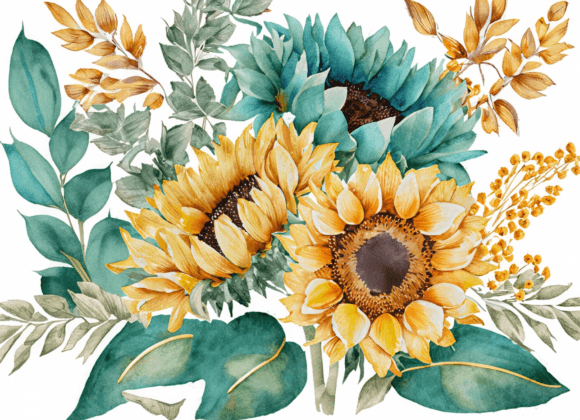
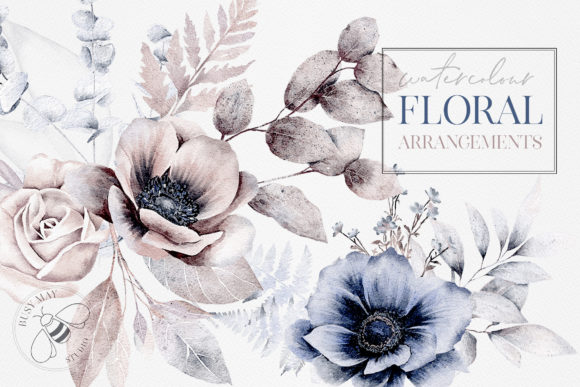
This particular collection of five hand-painted watercolor flower arrangements uses a carefully curated spring pastel palette: dusky blue, heather lilac, and beige. These aren't random color choices. They sit in that sweet spot between muted and vibrant, working beautifully together without competing for attention. The result is a set of florals that feel cohesive, sophisticated, and versatile enough to adapt across dozens of different creative applications.
Why Soft Pastel Florals Work So Well in Design
Color psychology plays a significant role in how audiences perceive visual content. Dusky blues evoke calm and trustworthiness. Heather lilac carries associations with creativity and gentle elegance. Beige grounds everything with warmth and neutrality. When you combine these three tones in watercolor form, you get a palette that communicates approachability without feeling childish, and refinement without feeling cold.
This balance makes the collection particularly useful for projects that need to appeal to broad audiences. A wedding invitation suite, for instance, benefits from the romantic quality of lilac florals while the muted blue tones keep the design feeling mature and intentional. Similarly, a small business branding refresh might use these arrangements to soften a corporate identity without sacrificing professionalism.
The watercolor technique itself adds another layer of appeal. Unlike flat vector illustrations, watercolor florals carry visible brushstrokes and natural color variations that give them texture and depth. This handcrafted quality resonates strongly with audiences who value authenticity—think artisan brands, boutique shops, wellness companies, and creative professionals who want their visual identity to feel personal rather than mass-produced.
Practical Applications Across Creative Projects
The real value of any design asset lies in how many different ways you can actually use it. A collection of watercolor flower arrangements in a cohesive pastel palette opens up possibilities across both digital and print media, which means a single purchase can support multiple projects over time.
Branding and Logo Design: Florals work as supporting elements in logo systems, particularly for businesses in beauty, lifestyle, wellness, food, and hospitality. A watercolor arrangement can frame a wordmark, serve as a background texture for business cards, or appear as a secondary graphic element across brand collateral. The key is using them strategically rather than overwhelming the primary brand mark.
Social Media Graphics: Platforms like Instagram and Pinterest reward visual consistency. Having a set of cohesive floral elements lets you create a recognizable aesthetic across posts, stories, highlights, and profile graphics. The pastel palette here works especially well for flat-lay backgrounds, quote graphics, and promotional announcements that need to feel inviting and warm.
Website and Blog Design: Watercolor florals make excellent blog headers, sidebar decorations, about-page imagery, and section dividers. They add visual interest without distracting from written content. For WordPress users or anyone building sites on Squarespace or Shopify, high-resolution PNG files with transparent backgrounds integrate seamlessly into layouts.
Wedding and Event Stationery: Save-the-dates, invitations, menus, programs, table numbers, and thank-you cards all benefit from floral illustration. The lilac and blue palette suits spring and summer weddings particularly well, though the muted tones also work for fall events when paired with warmer typography and paper stocks.
Packaging Design: Product labels, box designs, tissue paper patterns, and sticker sheets gain character from watercolor elements. Small-batch candle makers, soap artisans, and gourmet food producers frequently use floral art to differentiate their products on crowded shelves.
Print Materials: Posters, flyers, postcards, and editorial layouts benefit from the organic quality of hand-painted florals. Magazine features, event promotions, and gallery announcements often use watercolor elements to establish a particular mood or aesthetic direction.
Digital Products and Marketing Assets: If you create and sell digital products—planner pages, printable wall art, desktop wallpapers, or social media template packs—watercolor arrangements serve as foundational design elements that elevate the perceived value of your offerings.
Working With High-Resolution PNG Files
Each arrangement in this collection comes as an individual high-resolution PNG file at 300 DPI. For anyone who hasn't worked extensively with print production, that resolution matters enormously. Files at 300 DPI reproduce cleanly at their intended size without pixelation or blurring, which means you can confidently send these to a professional printer for wedding invitations, business cards, or art prints without worrying about quality degradation.
The transparent background format is equally important. PNG files with transparency layer cleanly over other design elements, photographs, colored backgrounds, and textures. In Adobe Photoshop, Illustrator, Canva, or any other design platform, you can drop these florals directly into your composition and they'll sit naturally on top of whatever's underneath. No tedious background removal required.
One practical note worth mentioning: screen colors and print colors don't always match perfectly. Monitors display colors in RGB, while most professional printing uses CMYK, and there can be subtle shifts between what you see on screen and what comes off the press. If color accuracy is critical for your project—say, for a brand identity where specific Pantone matching matters—it's always wise to print a small test run before committing to a large order.
Integrating Florals Into a Cohesive Visual Identity
The strongest designs use decorative elements with intention. Rather than scattering watercolor flowers randomly across every surface, consider how they function within your broader visual system.
Start by identifying where florals add the most impact. In many brand systems, they work best as secondary or tertiary elements—supporting the primary logo and typography rather than replacing them. A watercolor arrangement might appear in the corner of a business card, as a subtle background wash on a website hero section, or as an accent on social media templates. The goal is consistency: using the same set of arrangements, or specific selections from the set, across all touchpoints so your audience begins to associate those particular florals with your brand.
Font pairing also deserves attention here. Watercolor florals with soft, rounded edges tend to pair well with serif typefaces that carry similar warmth—think transitional serifs or old-style serifs with moderate contrast. For a more contemporary feel, clean sans-serif fonts create an appealing contrast against the organic watercolor textures. Script and handwritten fonts can work beautifully too, though readability becomes a concern if both the typography and the florals compete for the viewer's attention.
Test your combinations at actual size before finalizing. A font pairing that looks balanced on a large monitor might feel cramped on a business card or illegible on a mobile screen. Print samples when possible, and ask someone unfamiliar with the project whether the text remains easy to read at a glance.
Making the Most of Your Design Assets
Collections like this one represent genuine value for anyone who regularly creates visual content. Five individual arrangements in a unified color palette give you enough variety to avoid repetition across projects while maintaining the visual consistency that makes a brand or a series of materials feel intentional and professional.
If you need to adjust the size of any arrangement for a specific application—scaling up for a poster or down for a favicon—most design software handles this gracefully with high-resolution source files. Just remember to maintain the aspect ratio to avoid distortion, and be aware that significantly enlarging any raster image will eventually reveal its limitations.
Should you need modifications, different dimensions, or have specific requirements for your project, reaching out directly to the creator is always worthwhile. Many designers who sell digital assets are happy to accommodate custom requests, whether that means adjusting colors to match an existing brand palette or providing files in an alternative format.
The beauty of working with hand-painted watercolor elements is that they bring a human quality to digital work. In a landscape increasingly dominated by AI-generated imagery and templated designs, genuine brushwork and intentional color choices communicate care and craftsmanship. Your audience may not consciously analyze why a particular design feels more trustworthy or appealing than another, but those subtle details accumulate into a perception of quality that strengthens every interaction they have with your brand or creative work.